Posts

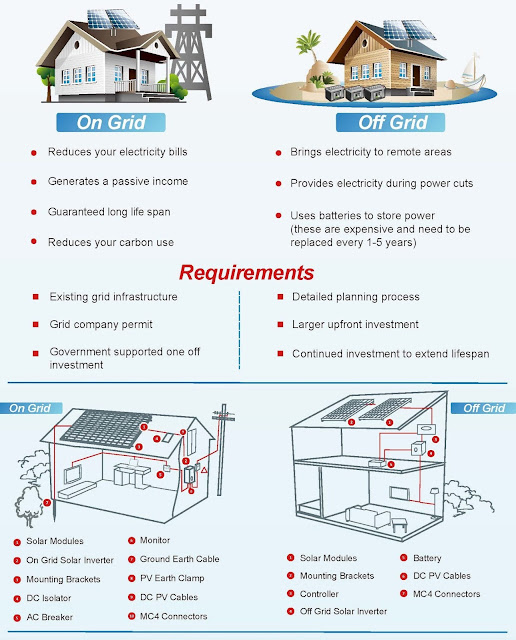
On Grid Vs Off Grid solar PV systems
Image
On Grid Systems On Grid Solar Systems (also known as ‘grid tie systems’ or ‘integrated systems’) are connected to the mains power supply just like a regular home. This means that mains power can still be used any time your solar panels generate less electricity than is needed, e.g. at night. In many countries, solar homes can also capitalize on times when the panels generate more electricity than is needed by selling the surplus back to the electricity company -usually at a nice profit. On Grid Systems usually require: Solar panels and an appropriate mounting system, Grid tied solar inverter(s) and monitor(s), Solar cables and MC4 connectors, AC and DC safety isolator switches, and Grounding earth cables and clamps. Off Grid Systems The problem is that in many countries it is either not permitted or not practical to connect on grid solar power systems to the mains utility grid. Off Grid Solar Systems do not need to be connected ...

Net metering Vs Gross metering- Basics

Image
Generating electricity is easier than ever. Drastic price decline in the last decade, combined with policy incentives for rooftop systems, have allowed consumers to install solar system on their rooftop. However, given that it is expensive to store electricity, systems are often connected to the grid so that surplus can be exported to the grid and deficit can be imported from the grid. Two arrangements are often defined by governments when designing the regulations for solar rooftop system – Gross and Net metering. Gross metering is an arrangement in which a consumer is compensated at a fixed feed-in-tariff for the total number of units of solar energy generated and exported to the grid (accounted by a unidirectional ‘gross meter’) and has to pay the electricity distribution company (discom) at retail supply tariff for the electricity consumed from the grid. The feed-in-tariff and retail supply tariff are typically different rates. Figure 1: Gross metering ...

Do solar panels work on cloudy days...?

Image
It is very common question by solar customers "Do solar panels work on cloudy days" 

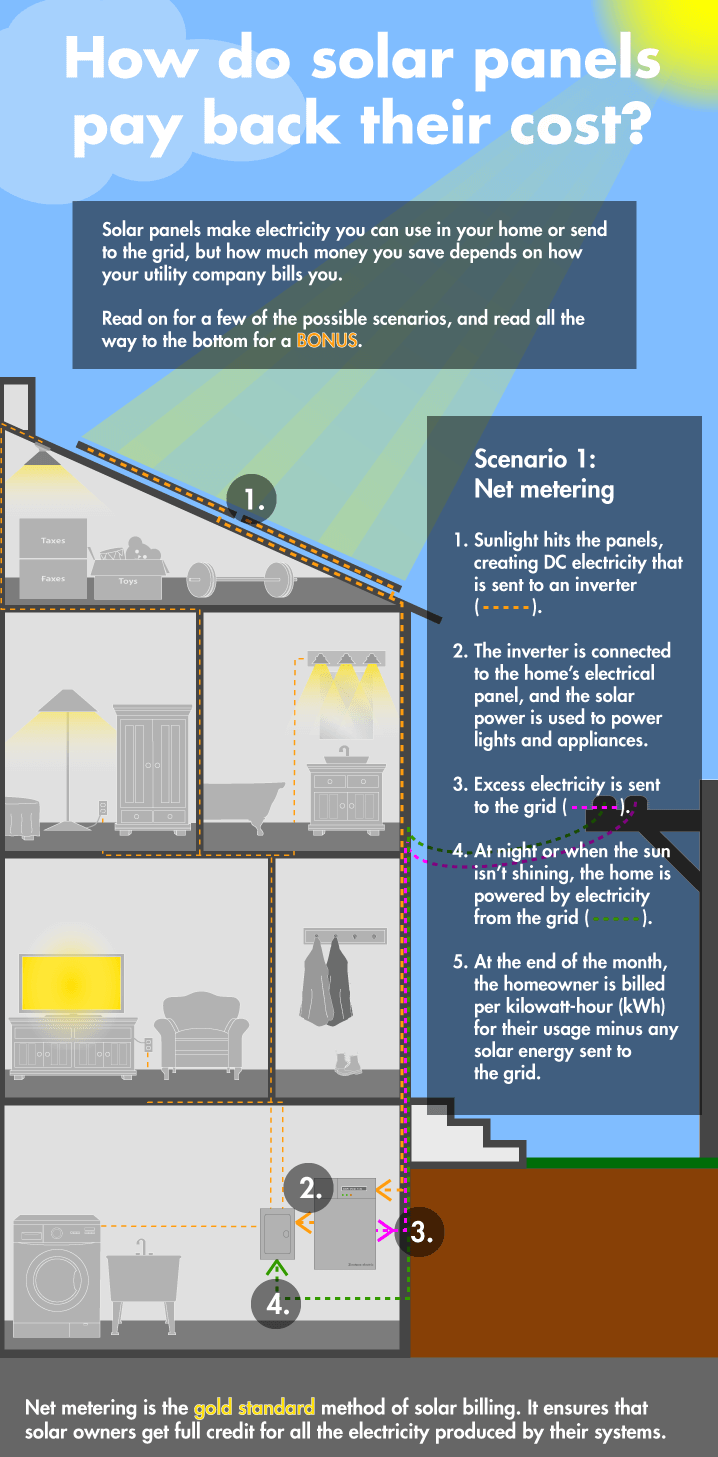
How do Solar panels pay back their cost..?

Image
Read on for a few of the possible scenarios-  Scenario 1: Net metering Scenario 2: Feed-in Tariff  Scenario 3: Parallel Generation

Solar Panel manufacturing

Image
Photovoltaic solar panels are designed to be very simple and durable. Mainly these five layers are involved for solar panel manufacturing  - 1. Anti-reflective glass ( High light transmission) 2. EVA encapsulent layer (Protection for solar cells) 3. Crystalline silicon cells (collect & transmit solar energy) 4. PVF back sheet (Durable final protection layer) 5. Junction box (waterproof wiring container)

Solar Panel Maintenance for Every Weather

Image
By Ranveer Yadav This question pops up in the FAQs of nearly every solar-related website and seems to be a great source of fear for many considering the switch to solar. Fear not, however, as we’re going to break down all the required maintenance for solar panels! Whether you live in the ever-dependable rain of the Pacific Northwest, the snowy Midwest, or the relentless sun of the South, read on to soothe that nagging fear of the unknown. The first thing to know is, if you sign up for a  solar lease or Power Purchase Agreement (PPA) , your solar company should include all necessary maintenance in the monthly payments you make. After all, they own the system, so they have a vested interest in keeping it working in tip-top shape. If, on the other hand, you own the system through a loan or cash purchase, you’ll need to know about regular maintenance. Read on! Periodic Maintenance Unless you installed some fancy sun-tracking equipment, your solar system will ha...

Are You Applying These Tactics to Close More Solar Sales?

Image
By- Ranveer Yadav Despite the tumultuousness of the so-called “solar coaster,” the solar industry’s growth trajectory is incredibly promising. Over the last seven years, solar's share of U.S. electrical generation grew from a paltry  0.1 percent to 2 percent . Of course, that still leaves a huge potential market for solar contracting companies. Despite the room for growth, being a solar salesperson comes with a number of challenges. Many customers have little knowledge of solar energy, and the size of the investment may make them hesitate. So, when you are selling solar installations, you need to embrace both traditional and contemporary methods in order to produce the sales numbers you need. In today’s article, we explore a variety of sales approaches that solar companies have found to be successful. Partnerships As every sales person knows, selling is much easier when you have solid leads--so it’s helpful to think creatively about partnerships that can help you id...